

Welcome to Mainframe Insider Aug/Sep,'25 issue!
Thank you to everyone who visited us at SHARE in Cleveland! It was a wonderful event, and we enjoyed meeting so many fellow mainframers. We appreciate you all!
Now, Welcome all to Log-On's Aug/Sep ‘25 edition of Mainframe Insider!
Mainframes are in the spotlight like never before—evolving from mission-critical workhorses into AI-accelerated innovation engines. Over the past two months, we’ve seen an explosion of advances: IBM pushing AI to the heart of zSystems with the z17 and LinuxONE, Broadcom sharpening the modernization toolkit, and new AI-driven approaches from partners like Kyndryl and Thoughtworks.
This issue brings you stories on improved Db2 Workload performance, practical AI tools for mainframe developers, and bold strategies for scaling modernization at the enterprise level. Together, these developments make one thing clear: the mainframe isn’t just surviving, it’s shaping the future of enterprise IT.
Check out the articles in this issue to see the latest across the mainframe space - thanks for reading Mainframe Insider!"
Why the next AI revolution may be inside the mainframe
The air inside IBM’s Poughkeepsie facility smells faintly of ozone and cold metal. Rows of matte-black server racks hum behind glass doors, lights blinking in a steady, algorithmic rhythm. Somewhere among them stands a machine that looks unassuming but represents a leap forward in the practical deployment of artificial intelligence: the new IBM z17 mainframe.
Artificial intelligence has come to dominate the conversation in tech, but the discourse is often abstract. The hard part isn’t training models. It’s putting them to work—securely, consistently and at scale. That’s what the z17 is built to do.... (MORE)
Accelerating mainframe modernization using generative AI
Mainframe modernization is hard: there's a huge amount of complexity that needs to be understood before it can be effectively addressed. Generative AI, however, can be a particularly powerful tool for understanding mainframe legacy codebases, something we've been exploring with Mechanical Orchard while working together on its Imogen modernization platform.
In this episode of the Technology Podcast, hosts Ken Mugrage and Alexey Boas are joined by Thoughtworks CTO Rachel Laycock and Mechanical Orchard CEO and Founder Rob Mee to discuss the partnership between the two organizations... (Story continues)

Broadcom: Datacom VSAM Migration Tool – Introduction
July 14, 2025 In keeping with the client commitment, Broadcom's Mainframe Engineering team recently provided a new tool that will help in the migration from BDAM/EXCP to VSAM LDS (linear datasets).
The VSAM Linear Dataset project has been in the works for over 2.5 years and the last major segment “Support migration of LXX to VSAM LDS” was completed and delivered with PTF LU11503 on February 13th, 2024.
The first clients adopting this new initiative (EXCP/BDAM to VSAM LDS) went through a lengthy process requiring assistance in doing so. Of course, this is a major endeavor for sites that carry many databases and large files. There’s a major planning effort to be made (Continue reading)
Unlocking Db2 Performance Through Smarter Query Handling
Organizations that depend on Db2 for z/OS understand the constant pressure to deliver results faster, more reliably, and at lower cost. As data volumes grow and applications become increasingly complex, the strain on Db2 intensifies. End users expect instant responses, developers rely on consistent throughput, and IT leaders must balance performance with tight budget controls. Meeting all three expectations requires novel approaches to handling Db2 workloads.
The Performance Challenge
Db2 is optimized for transactional consistency and integrity, but workloads often involve thousands—sometimes millions—of repetitive queries. Whether from online banking platforms, insurance claim systems, or large-scale retail applications, many of these queries retrieve the same result sets over and over. Each execution forces Db2 to parse the SQL, access indexes, retrieve data from tables, and perform I/O operations. Even when the underlying data hasn’t changed, the system repeats the same costly steps.
The result is a double penalty:
1. High CPU consumption, driving up MIPS usage and monthly licensing costs.
2. Excessive I/O activity, slowing response times and putting additional pressure on storage subsystems.
For enterprises running mission-critical applications, these penalties translate into higher operational expenses and reduced system capacity. (Click to Explore)
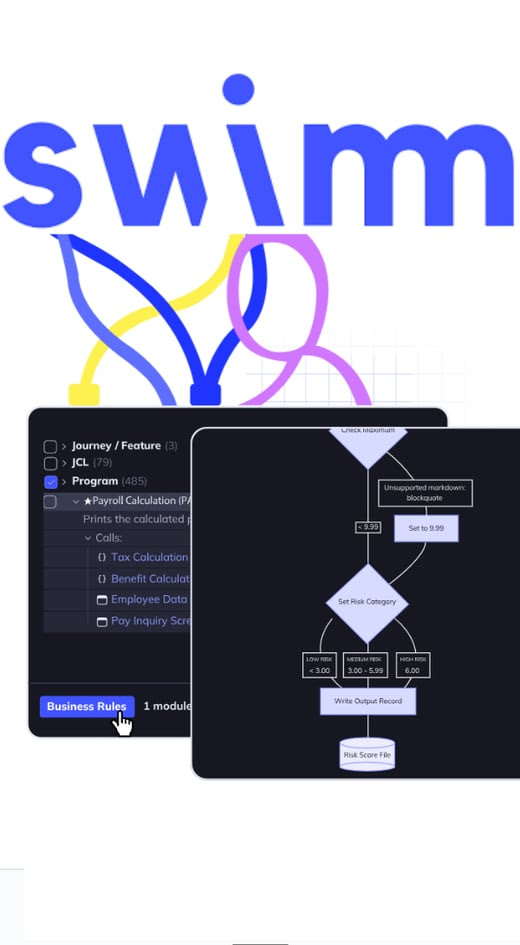
Mainframes with AI: 3 Use Cases and 5 Tools to Know in 2025
A mainframe is a high-performance computer capable of processing massive amounts of data quickly. It is specifically designed for large-scale commercial and government applications, managing thousands of users simultaneously. As AI technology gains a prominent role in the economy, organizations are keen to use AI technology within the mainframe ecosystem.
Adding AI to mainframes brings advanced analytics and decision-making closer to the data, especially in environments where data privacy, speed, and reliability are essential. Instead of transferring sensitive data to the cloud, companies can run AI models directly where their data resides—on the mainframe—enabling faster insights.
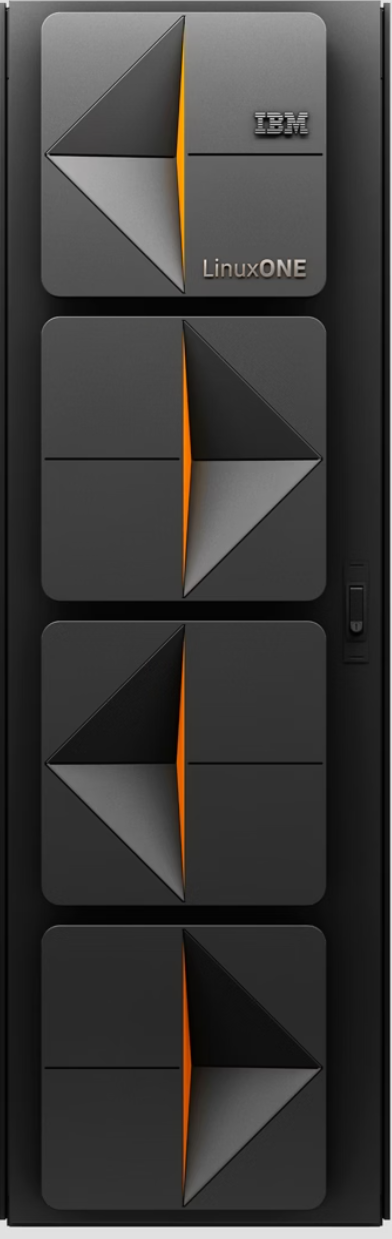
IBM introduces new generation of LinuxOne AI mainframe
IBM has updated its LinuxONE mainframes, using the same hardware as its new z17 mainframe platform but designed only to run Linux operating systems, with the focus on artificial intelligence.
The LinuxONE Emperor 5 is the fifth generation of IBM LinuxONE iron and comes three years after the release of the last generation. The new Emperor has been updated for improved security, cost-efficiency, and AI acceleration of mission-critical enterprise workloads.
Another focus of Emperor 5 is on operational efficiency and consolidation. By moving cloud-native, containerized workloads to LinuxONE, IBM estimates organizations can save up to 44% on TCO over five years, and up to $10.6 million in TCO savings over the same period....

Mainframe application modernization at scale: The role of AI
By now, we know AI and generative AI can accelerate application modernization projects – whether by extracting business rules from legacy code, translating older programming languages into modern languages or by managing other tasks.
The challenge now is more often about scale.
What works well in systems with just a few thousand lines of code doesn’t always translate to enterprise-grade mainframe systems, composed of millions of lines of code across hundreds of applications.
So how to move forward with confidence, while also balancing cost, capabilities and tooling?
While corporate IT environments adopt tools like Okta or Azure AD to manage identities, mainframe access still relies on older systems like RACF, ACF2, or Top Secret. The result? A dangerous IAM blind spot where MFA is difficult to enforce, audit trails are disconnected, and attackers can exploit silos.
The cost of scale
In a previous role, I worked with a major manufacturer preparing for a large-scale modernization project. The plan: to migrate some 300-plus applications. But after months of planning and preparation, leadership was still staggered by the investment required to execute this effort at scale.
I know many of you will be familiar with this story: a modernization journey stalled by cost realities and scaling complexities... (Read the Full Article)
All product names, logos, and brands are property of their respective owners. Use of these names, logos, and brands does not imply endorsement.
If you found this valuable, please consider sharing it with your colleagues.