
Welcome to MainframeMatters Jan/Feb issue!
This edition highlights a clear shift in how enterprises are approaching the mainframe. AI is moving beyond experimentation and is now being applied directly to core Z workloads, including code analysis, JCL management, modernization planning, and operational decision-making.
Across the ecosystem, agentic AI is emerging as a practical tool to help teams modernize legacy applications, extend 3270 environments, and reduce manual effort, all without sacrificing the stability, performance, and trust that define the mainframe.
At the same time, growing security and regulatory pressure is driving organizations to reassess long-standing practices, address hidden risks in legacy code and data movement, and strengthen operational discipline.
Finally, the human impact remains critical. The focus is on enabling mainframe teams to work smarter with AI and automation, not replacing deep expertise.
Check out the articles in this issue to see the latest across the mainframe space - thanks for reading Mainframe Insider!
Agentic AI for smarter mainframe modernization with IBM watsonx Code Assistant for Z

The 2.8 release helps enterprises unlock new levels of efficiency and intelligence in their modernization journey through an agentic experience, with the product’s familiar capabilities now converging into a unified, intuitive workflow.
To meet the rising demand for AI-driven efficiency, IBM is enhancing its toolset that brings modernization and automation directly to mainframe developers and architects. IBM watsonx Code Assistant for Z is an end-to-end mainframe application modernization developer assistant, powered by AI and automation.
According to a recent study from IBM Institute for Business Value, AI-enabled workloads, many driven by Agentic AI, are expected to rise from just 3% in 2024 to 25% by 2026. That’s an eightfold increase, signaling a shift in how enterprises streamline workflows to help unlock new levels of agility and efficiency.
The 2.8 release helps enterprises unlock new levels of efficiency and intelligence in their modernization journey through an agentic experience, with the product’s familiar capabilities now converging into a unified, intuitive workflow...(Continue reading)
What “Smart” Db2 Utility Automation Really Looks Like
When “AI on the mainframe” comes up, it’s often framed as something radically new: models, training cycles, probabilistic decisions. But in Db2 for z/OS environments, the most valuable form of intelligence isn’t artificial, it’s observational.
Intelligent utility automation doesn’t try to over-predict the future, it observes what’s actually happening.
From Static Automation to Adaptive Control
Db2 utilities often run on fixed schedules, an approach that acts on objects regardless of their behavior:
- REORGs execute whether or not performance has changed
- RUNSTATS runs on the calendar, not on demand
- COPY jobs fire even when recoverability is already assured
The Challenge: Managing Linux Guest on z/VM Without Wave
Adaptive automation changes this approach by continuously observing the environment:
- Real-time statistics reflect actual object change
- Access performance counters reveal degradation
- Space growth trends highlight future risk before outages occur
Leverage Mainframe Assets: Modernize and Extend Legacy 3270 Applications – Without Touching the Code
For over half a century, mainframe computers have been the silent engines driving the world’s most critical business operations. In sectors like banking, insurance, and logistics, these systems continue to deliver the mission-critical performance organizations rely on.
Yet, the reality is that many mainframe applications still use 3270 “green screen” interfaces - functional but outdated in the context of today’s expectations for usability, accessibility, and integration. Rewriting these systems is often seen as the only path forward. But in truth, there are lower-risk, higher-return alternatives, especially for organizations relying on IBM 3270 mainframe environments.... (Read the full article)

How Agentic AI Can Transform Mainframe Environments
The rise of agentic AI systems marks a significant evolution in artificial intelligence, shifting from traditional rule-based systems to dynamic, decision-making entities that adapt and learn in real-time. These systems are poised to revolutionize industries, including mainframe technology, by enabling more personalized, efficient and autonomous operations.
The future of agentic AI is marked by the emergence of AI agents, the adoption of which is driven by a need to manage complex tasks autonomously and respond to ever-changing environments more efficiently.
What makes agentic AI more than just another wave of automation is that it forces enterprises to rethink longstanding assumptions about how technology is deployed and how processes are implemented. For decades, IT strategy has largely been about codifying best practices into predictable processes; success came from reducing variability. Agentic systems flip that logic. They can thrive in ambiguity and adapt on the fly. The organizations that win in this era won’t be those that simply plug agents into .... (Continue reading)
Security Alert: The Silent Risk of Assembler Code in IBM z/OS Environments

In most large European financial institutions, the IBM z/OS mainframe remains the backbone of the business. Payments, settlement, core banking, custody, clearing, and regulatory reporting all depend on it. However, there is a critical risk that is rarely addressed and even more seldom monitored: the execution of apparently legitimate Assembler programs capable of causing immediate and severe operational impact, without exploiting known vulnerabilities or configuration weaknesses. This risk is not theoretical. It is real, executable, and fully aligned with insider threat and supply-chain scenarios, precisely the type of risks.... (Continue reading)
Is Your z/OS Environment Still Using FTP? It’s Time for a Security Upgrade
FTP transmits everything in plain text, passwords, usernames, and your data. Anyone with network access can see it all. No encryption. No data integrity checks. No security.
For z/OS shops handling regulated data, this creates immediate compliance issues.... (See the full details)
Why Anytime is the Right Time for z/OS Training
The mainframe industry is in a continual state of evolution, requiring ongoing training and development for new professionals. Trainers, mentors, team leaders, and department managers all need reliable access to mainframe resources to ensure their teams are equipped with up-to-date skills and knowledge. As new talent enters the field, the necessity for accessible and effective training has become more pressing than ever.
Countless market surveys highlight a continued reliance on the mainframe environment in supporting large-scale business operations. Despite the wide array of IT platforms available, the IBM mainframe remains the cornerstone for business-critical workloads. Its usage is only increasing, as more organizations rely on its stability and scalability to meet the demands of expanding customer bases and enhanced functionalities. This growth translates into a continual demand for skilled mainframe professionals...(More information)


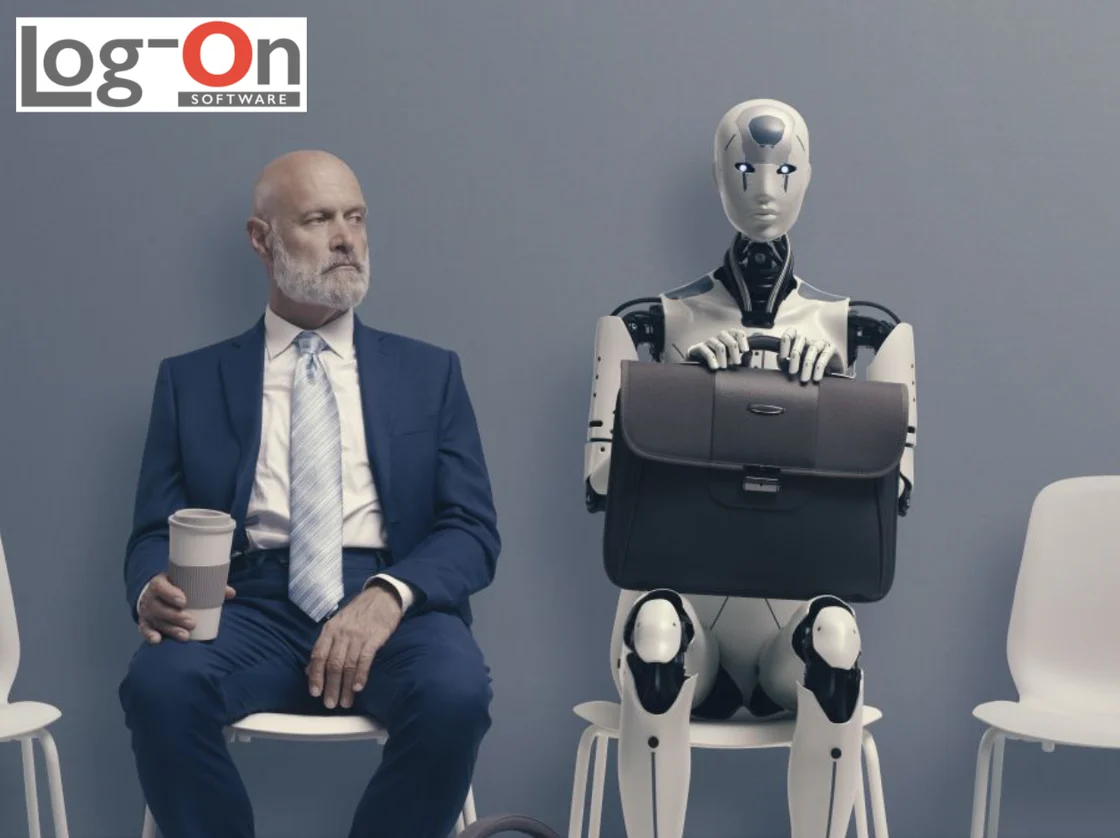
Implementing AI for JCL Management: Will I Lose My Job?
Major technology shifts cause disruption and also provide the opportunity for great benefits. Implementing AI for JCL management (AI JCL) will be no different. In researching AI JCL, SEA has found that some AI-related job cuts are beginning to occur. But don’t be alarmed. The situation is more nuanced than it seems and the career outlook for experienced mainframe professionals; especially those with deep institutional knowledge change, may be a lot brighter than the hype makes it seem.
Although we might be tempted to think AI enhancement is a bubble that will soon burst or a trend that will soon disappear, reality tells us differently.
Markets are estimating a projected AI investment of $22 trillion over the next five years (figure 1). This is roughly 3.7% of global GDP. ...(Read the full article)
All product names, logos, and brands are property of their respective owners. Use of these names, logos, and brands does not imply endorsement.
If you found this valuable, please consider sharing it with your colleagues.