

Welcome to MainframeMatters Nov/Dec issue!
This edition arrives during a moment when AI is no longer an experiment on the mainframe, but an operational force reshaping how enterprises run Z environments.
New agentic frameworks, smarter inferencing pipelines, and automated documentation tools are beginning to streamline everything from DevOps to compliance workloads.
At the same time, security and regulatory pressure continues to rise, pushing organizations to strengthen audit readiness and prepare for frameworks like DORA.In this issue, we dive into the evidence driving this shift:
Across the ecosystem, vendors are converging on a single theme: helping teams modernize on Z without abandoning the stability and performance the platform is known for.
These developments paint a clear picture of where mainframe operations are heading.
Check out the articles in this issue to see the latest across the
mainframe space - thanks for reading Mainframe Insider!
Kyndryl Launches Agentic AI Framework and Services for the Mainframe

Kyndryl (NYSE: KD), a leading provider of mission-critical enterprise technology services, announced Nov 24, 2025 new AI-powered services that combine the company’s deep mainframe expertise with agentic AI and hybrid IT computing capabilities to accelerate application and solutions development, increase operational agility and unlock new business insights by expanding customers’ AI usage on the platform.
Kyndryl’s agentic AI mainframe services are designed to enable IBM z/OZ customers to embrace innovative technology, expertise and AI-infused delivery of services, speeding decision making and simplifying complex processes across application and infrastructure management.
“Kyndryl is leading the way in providing world-class agentic AI-enabled delivery services to customers that will instill confidence in the mainframe’s role as an engine of innovation for global enterprises,” said Hassan Zamat, Global Practice Leader for Core Enterprise and zCloud at Kyndryl. “We are committed to combining the power of our skilled delivery practitioners with agentic AI to provide differentiated experiences and outcomes to help drive growth for our customers.”... (Continue reading)
Taming the Chaos: Managing Linux Guest on z/VM
Running Linux on IBM zSystems gives organizations rock-solid performance, exceptional scalability, and industry-leading security. Yet to the Linux administrator, managing Linux guests on z/VM can feel like navigating a labyrinth wearing a blindfold. Traditional z/VM administration is complex. Each new Linux deployment and resource allocation can trigger a chain of highly technical steps that only seasoned z/VM specialists are comfortable performing.
As Linux workloads grow, the challenge becomes obvious: How do you scale your environment when the required expertise is limited and the processes are complex?
That’s where Wave for z/VM delivers transformative value.
The Challenge: Managing Linux Guest on z/VM Without Wave
Out of the box, z/VM is a powerful hypervisor for virtualized Linux server farms, but using it directly to provision and manage Linux guests, resources and virtual networks is a challenge... (Read the full article)
Scale and Optimize Gen AI Inferencing Using the IBM AI Optimizer for Z 2.1
AI Optimizer for Z 2.1 is designed to serve AI models and perform inference optimization on IBM Spyre accelerator. It optimizes gen AI inferencing across infrastructures through key-value (KV) caching and monitoring capabilities configured for IBM Z clients.
For enterprises running workloads on IBM Z, the path to operationalizing AI is not about whether they can run it; it’s about how efficiently and securely it can be integrated into existing environments.
AI workloads are becoming larger and more resource-intensive, particularly with generative AI and LLM-based applications. On Z, clients must balance:
- Latency-sensitive workloads that can’t leave the platform.
- Compliance and data residency requirements that restrict where inference runs.
- Rising compute and energy costs driven by inefficient deployment of models... (Read the full release)
Application Modernization with Automated Documentation
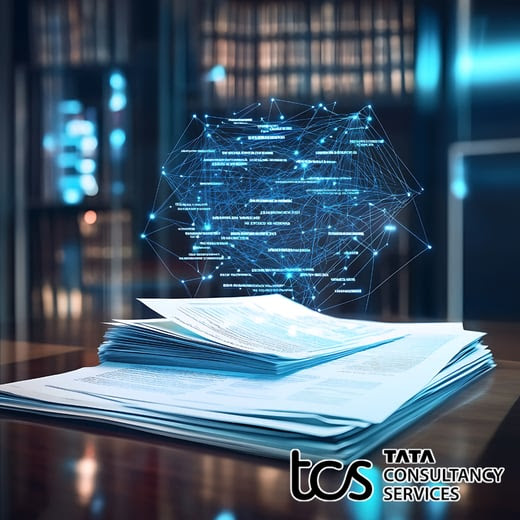
Lately, many organizations across the globe have been focusing on transforming their legacy mainframe applications into a modern platform. Application modernization refers to converting, rewriting, or porting of a legacy system to modern computer programming languages and digital technologies. Enterprises need to prepare, analyze, and perform reverse engineering to transform their legacy applications into modern applications.
Most mainframe applications are written using COBOL, and some of them could be as old as 60 years. It is essential for organizations to be well-versed with their applications to complete the legacy transformation successfully... (See the full details)
Unlock the Full Power
of Kafka with Mainframe Data
The challenge lies in bridging the gap safely, and without disruption.
Apache Kafka has become the nervous system of modern business. It powers event-driven applications, operational dashboards, and the instant digital experiences your customers now expect. Across industries, organizations are streaming billions of events daily—from mobile... (Continue Reading)
Rocket Software Unveils Next Evolution of DevOps Tools That Evolve the Developer Experience to Bridge IT Skills Gap Across Core IT Systems
Rocket Software, a global technology leader in modernization and cross-platform DevOps, today announced a new generation of innovations designed to enhance developer experience (DevEx), improve agility, and reduce the growing skills gap across mission-critical systems, including IBM Z® and IBM® i. The latest advancements in Rocket Software’s DevOps portfolio deliver AI-driven insights, deeper automation, and more intuitive workflows, enabling faster, higher-quality releases across IBM Z, IBM i, distributed systems, and cloud environments.
For many organizations, integrating core systems with modern toolchains has been a persistent challenge, limiting their ability to fully leverage existing investments and slowing modernization. Rocket Software is changing that with DevEx-driven solutions that leverage technology like AI to empower every developer, whether they work in a green-screen environment or a modern IDE.
Through seamless integration with leading DevOps tools, advanced automation, and AI-powered assistance, Rocket Software enables teams to innovate faster and modernize at their own pace – whether running a modern, heritage, or hybrid DevOps approach. Rocket is the only partner delivering a unified, DevEx-driven approach to DevOps spanning IBM Z, IBM i, distributed, and cloud platforms... (Check out what's new)

How to Prepare Your
IBM z/OS Mainframe Infrastructure for
Full DORA Compliance
The Digital Operational Resilience Act (DORA) is transforming the way European financial institutions and critical infrastructure organizations manage technology risk. Triggered by repeated large-scale cyber incidents and IT outages, DORA was introduced to ensure organizations remain resilient, even under severe digital disruption.
While cloud and distributed systems often take center stage in discussions, mainframes—particularly IBM z/OS—are central to mission-critical operations and must be included in compliance strategies.
Mainframes power the majority of financial transactions, including payment flows, insurance claims, customer data management, and even state-level records. Failing to integrate mainframes into DORA compliance planning leaves significant regulatory, operational, and reputational gaps.... (More information)
Introduction To Platform Engineering on z/OS
Platform engineering seeks to streamline development and testing activities. The aim is to enable the team to concentrate on innovation and software quality, rather than being hampered by mundane tasks, such as raising tickets, or resolving configuration issues. By modernising the developer experience (DevX), platform engineering empowers developers and testers to be more productive and deliver superior technology.
A key component of platform engineering is the creation of Internal Developer Platforms (IDPs). These platforms abstract the complexities of environments and provide developers with self-service capabilities, automation, and modern tooling. The IDP serves as a central hub to simplify tasks for developers and testers, reducing cognitive load and enabling teams to focus on innovation and quality. An effective IDP provides... (Read the full article)
Bridging the Knowledge & Skills Divide
with AI-Powered Assistants
Organizations today are moving beyond generic chatbots and stand-alone AI experiments by embedding production-ready assistants directly into their core mainframe environments. For developers, this means having an AI-powered experience within their application development and modernization tools, where the assistant explains legacy code, suggests modern design patterns, and automatically generates clear documentation.
For operations teams, the same intelligent technology is woven into monitoring and incident management solutions, using hybrid AI to explain probable causes of mainframe system issues and recommend next best actions, all in natural language, directly within the operational workflows they rely on every day... (Continue to the article)
All product names, logos, and brands are property of their respective owners. Use of these names, logos, and brands does not imply endorsement.
If you found this valuable, please consider sharing it with your colleagues.